'Right Hand Rule' – equal priority intersections in practice
Who has the right of way at an intersection without signs? The right hand rule is the foundation of road traffic. Learn how to apply it not to force priority.

Editorial Team
Driving License Experts Team
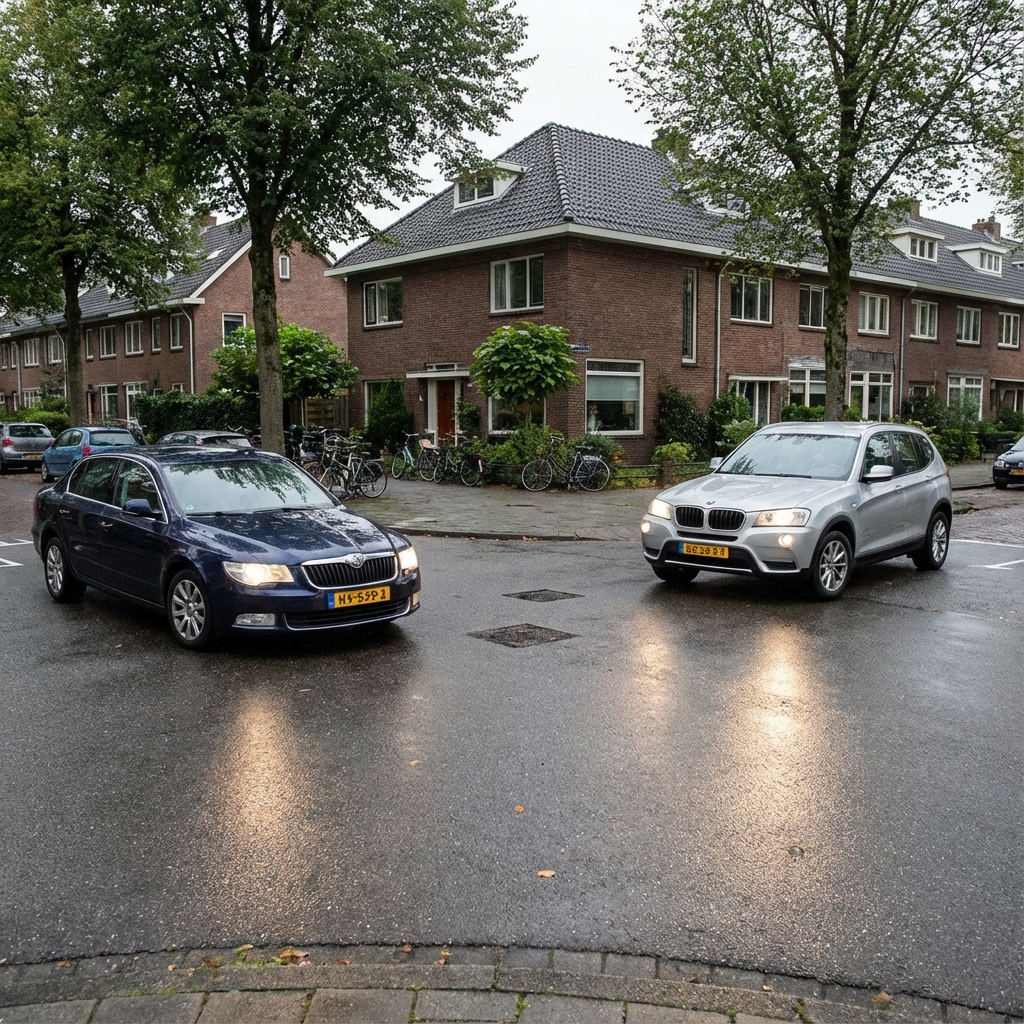
Equal priority intersections are a nightmare for drivers in big cities (on estates) and in villages. Lack of "Yield" or "Priority Road" signs introduces confusion. Who goes first? The answer is simple, as long as you know the "right hand" rule.
What is an equal priority intersection?
It is an intersection where there are no signs regulating priority (D-1, A-7, B-20) nor traffic lights. All roads are "equally important" (provided they are paved – a dirt road is always minor!).
Marking: Often (though not always) sign A-5 "intersection of equal roads" stands before such an intersection (such a characteristic "X").
Golden Rule of the Right Hand
The rule says: You yield priority to the vehicle approaching from your RIGHT side.
Examples in life:
- Going straight: You look right. If nothing is coming – you go. If something is coming – you stop. (The vehicle from the left must yield to you).
- Turning right: You have it "best". You don't cut off anyone from the right (unless pedestrians), and those from the left and opposite must let you pass.
- Turning left: Here is the hardest part. You must let pass:
- Those from the right (general rule).
- Those from the opposite direction going straight or right (left turn rule).
Stalemate Situation (Deadlock)
Imagine a car approaching from each of the four sides. Each has someone on the right. Who goes first? Regulations do not regulate this directly. Culture and visual communication are required. Usually one driver waves, letting the one on their left (or right) pass, unloading the traffic jam. On the exam such a situation is rare, but remember the principle of limited trust.
Trams on equal priority
Attention! A tram at an equal priority intersection has ALWAYS priority, regardless of which side it approaches from (whether from right or left).
Traps you must watch out for
- Residential Zone (blue rectangle D-40): In the whole zone all intersections are equal priority! Leaving a residential zone onto a regular road, you are joining traffic (yield to everyone).
- Speed limit zone (B-43): Often in such zones (e.g. "Tempo 30") equal priority intersections are used to slow down traffic.
- Internal road: Exit from an internal road is joining traffic. Even if a car comes from your right, but from an internal road (or parking, gas station) – you have priority.
How to pass and not force?
Examiners like to take students into tight estate streets.
- Slow down: Before every intersection on the estate take your foot off the gas.
- Head right: Ostentatiously look right so the examiner sees you describe searching for danger.
- Don't follow others: Just because "locals" drive there by memory doesn't mean they drive according to regulations. You drive according to the right hand rule.
Related articles
Roundabout on the exam – indicators and lanes
Roundabout is not black magic! When to turn on the indicator? Which lane to take? We dispel doubts regarding driving on a circular intersection.
Most common mistakes on the practical exam – TOP 10 traps
Why do students fail the driving test? Learn the 10 most common mistakes (right of way, green arrow, parking) and how to avoid them.