Traffic Signs in Poland That Confuse Even Experienced Drivers
Residence zone vs traffic zone, internal road, broken give way... We explain signs that most often cause trouble.

Editorial Team
Driving License Experts
Polish roads are dotted with signs. Some of them are obvious, others... well, require a moment of reflection. On the exam, this moment is often missing. Here is a compilation of signs and situations that most often cause confusion (and exam errors).
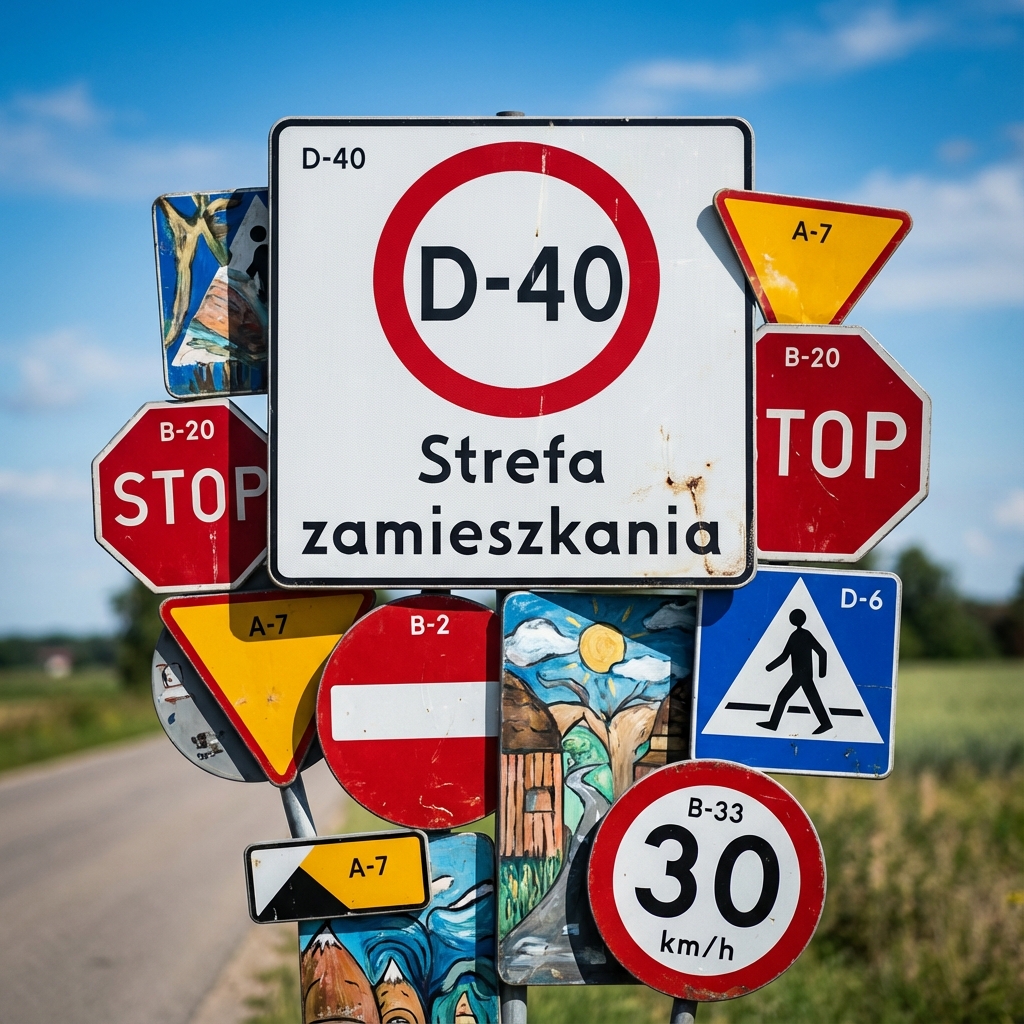
1. Residence Zone (D-40) vs Traffic Zone (D-52)
These are two completely different worlds, although they sound similar.
-
Residence Zone (D-40):
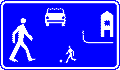
- Pedestrians have priority everywhere (including on the roadway).
- Max speed 20 km/h.
- Parking only in designated places.
- Speed bumps do not have to be marked.
- Leaving the zone, you are joining traffic (you yield to everyone!).
-
Traffic Zone (D-52):

- Placed on internal roads (e.g., supermarket parking lots) so that traffic rules apply there.
- If there are no signs, the right-hand rule applies.
- Leaving the traffic zone onto a public road, you are joining traffic.
2. Internal Road (D-46)

A black hole of rules. On an internal road, the police only intervene if safety is endangered (accident, drunk driving).
- Traffic rules are set by the land manager.
- Often the right-hand rule applies, but not always!
- Key for the candidate: Exiting an internal road onto a public one is joining traffic. You must yield to everyone.
3. B-20 "STOP"

Seems simple? And yet.
- Mistake 1: "Rolling". The wheels must come to a standstill (0 km/h). Even for a fraction of a second.
- Mistake 2: Stopping in the wrong place. You stop where the absolute stop line is marked. If there isn't one – in a place where you have visibility. Not before the sign (unless the sign is level with the line/visibility spot).
4. C-12 "Roundabout" + A-7 "Yield"

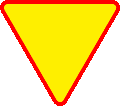
This is the standard marking of a roundabout in Poland.
- Entering, you yield to those who are already on the roundabout.
- You do not turn on the left indicator before entering (unless the specifics of the intersection require it, but that's a topic for a separate war of experts).
- You turn on the right indicator only when exiting.
5. T-6a/T-6c (Supplementary plates)
The thick line is the priority road. The thin ones are subordinate.
- If you are driving on the thick line and it turns – you have priority, but you must turn on the indicator.
- If you are driving off the main road onto a minor one (straight in the geometric sense, but leaving the "thick" for the "thin") – you yield to those coming from the opposite direction on the main road (if any) and usually do not need to use the indicator (if driving straight), but it depends on the geometry.
Summary
Look at vertical signs, but don't forget about horizontal ones (lines). And remember: on the exam, it is better to slow down and make sure twice than to miss a "give way".
Related articles
Hardest Driving Exam Questions – How to Remember Them?
Discover the questions that cause the most failures and proven ways to remember them. Don't get caught off guard on the theory exam!
How Much Does a Driving License Cost in 2025 in Poland? Full Cost Breakdown
Planning to get a driving license? Check how much you will realistically spend on the course, medical exams, state exams, and additional lessons in 2025.