
Mechanical aspects related to maintaining road safety
70 questions in this category
This category covers the mechanical aspects of vehicle maintenance that directly impact road safety, including tire condition and pressure, brake system function, steering mechanism, suspension, and fluid levels. In Poland, the driver is legally responsible for ensuring their vehicle is in a roadworthy condition before every journey. Driving a mechanically defective vehicle is an offense.
Why This Category Matters on the Exam
Mechanical safety questions appear in 1-3 exam questions, testing whether you understand how vehicle condition affects safety. Questions typically ask about tire wear indicators, brake warning signs, and the consequences of mechanical failures at speed. While fewer questions come from this topic, they test essential practical knowledge every driver needs.
Common Mistakes and Tips
The legal minimum tire tread depth in Poland is 1.6 mm, measured using the tread wear indicators (TWI) built into every tire. However, experts recommend changing tires at 3 mm for summer tires and 4 mm for winter tires. Poland requires winter-appropriate tires during winter months on certain roads, though unlike some neighboring countries, there is no blanket legal requirement for winter tires nationwide. Many candidates do not know that mixing radial and bias-ply tires on the same axle is prohibited, and that all tires on an axle must be the same size and type. Signs of brake problems include the vehicle pulling to one side during braking, unusual noises, or a spongy brake pedal (indicating air in the hydraulic system). Check tire pressure when tires are cold, as pressure increases with temperature. Under-inflated tires increase fuel consumption, wear unevenly on the edges, and are more prone to blowouts at high speed.
What is the allowable minimum depth of the thread in a tire not fitted with a tire indicator bar.
A: 1.6 millimetres.
Which of the following faults precludes the car from being safely used on the road?
C: Burnt out light bulb of the left rear indicator.
Which of the following actions must be taken when the warning light of the brake system turns red during driving?
B: Stop the vehicle and check the level of brake fluid and the operation of the brakes.
What does the cooling system warning light flashing red on the move in a passenger car warn of?
A: Of too high temperature of the cooling liquid.
Which of the following circumstances may indicate bad technical condition of a passenger car?
B: Traces of leakages of operating fluids in the place of parking.
Which of the following circumstances may indicate bad technical condition of a passenger car?
A: Emission of black, blue or white thick fumes.
In which of the following cases using a passenger car does not threaten the road safety?
C: Short-lived use of the temporary use spare wheel when one tire is damaged.
In which of the listed cases regular technical inspections of a vehicle has influence on its safe use in road traffic?
C: Throughout the use period.
What does the warning light with the battery symbol turned red when on the move warn of?
C: Of faulty operation of battery charging.
org.jpg)
Which of the following results may be caused by continuing driving when the engine oil pressure warning light is flashing red?
A: Serious damage to the engine.
org.jpg)
Which of the listed emergencies makes it impossible to use a passenger car in road traffic?
C: Invalid "stop" lights.
Which of the listed actions should be taken in the first place when the red engine oil pressure control light goes on while driving?
C: Stop the vehicle and turn off the engine.
What may be the consequences of a driver's failure to fasten their seat belts?
B: More bodily injuries suffered by the driver in the event of an accident.
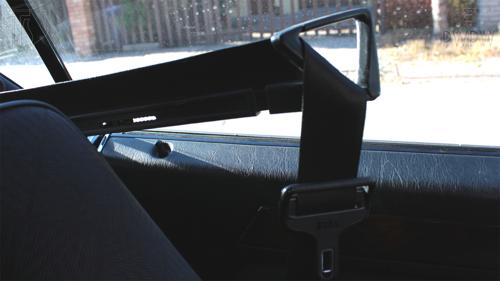
What does it mean when the braking pedal sinks down when you start the engine as you press the pedal?
A: That the power brake system is working.
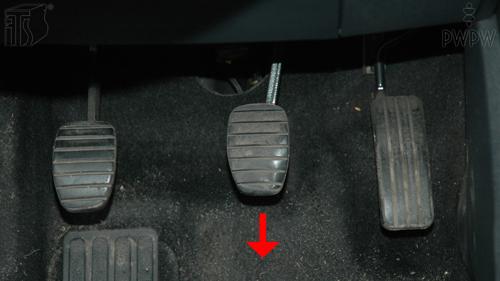
What may be a cause of the excessive free play of the steering wheel in the car?
A: Worn tie rod ends.
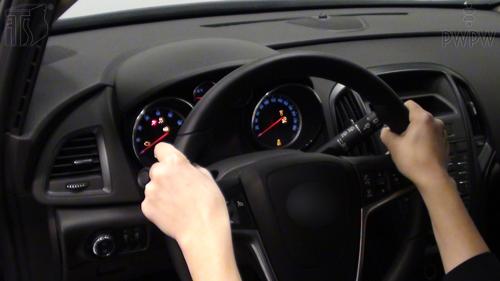
What might be the cause of a vehicle pulling to the left while driving in a straight line?
B: An improper wheel alignment.
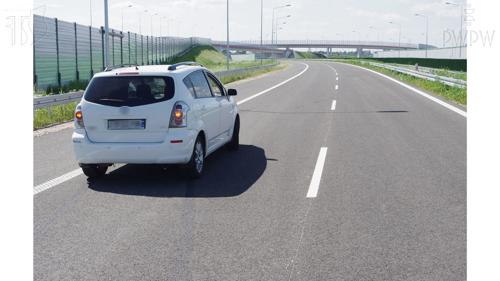
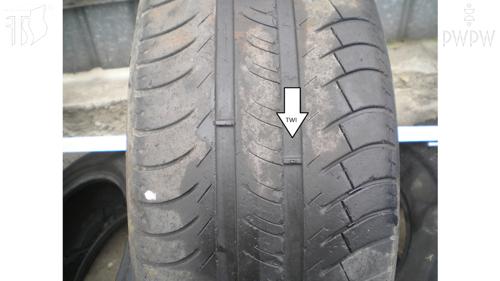
How is braking on a wet road affected by using tyres having tread wear exceeding maximum safety limits?
C: Decrease of friction and the lengthening of the braking distance.
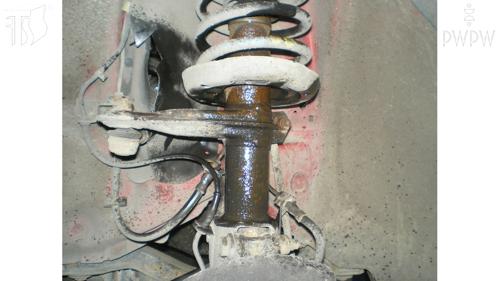
What may be the effect of worn shock absorbers on the front wheels?
B: Decreased tyre grip and steerability of the vehicle.
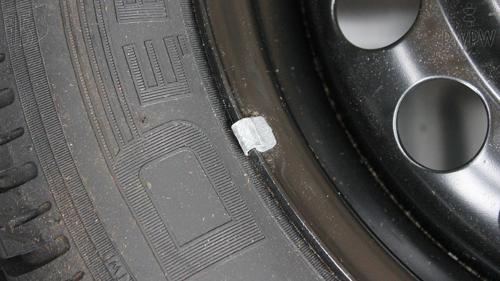
What may be the effect of not balancing the wheels of the vehicle?
C: Uneven tread wear.
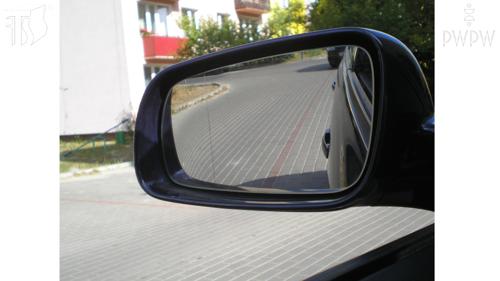
What would be most affected by wrong adjustment of external mirrors in a motor vehicle?
B: Safety during lane changes.
What is the purpose of the position lights of a vehicle?
B: To indicate the position of the vehicle.
What may be the effect of wrong adjustment of low-beam lights?
C: Blinding the drivers approaching from the opposite direction.
How should low-beam lights be aimed in a motor vehicle?
C: In such a way that they light the road asymmetrically.
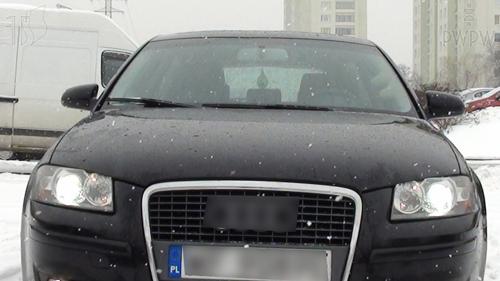
What is the purpose of the rear anti-fog lights of a passenger car?
C: They improve the visibility of the car in fog.
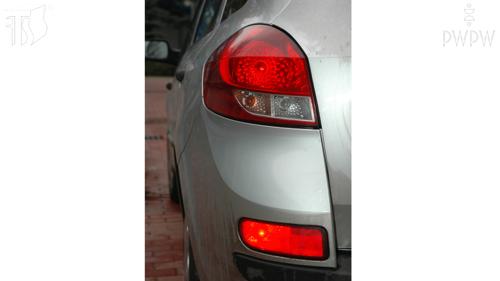
What is the function of reversing lights in a motor vehicle?
B: They light the road at the back of the vehicle and they signal the reversing manoeuvre.
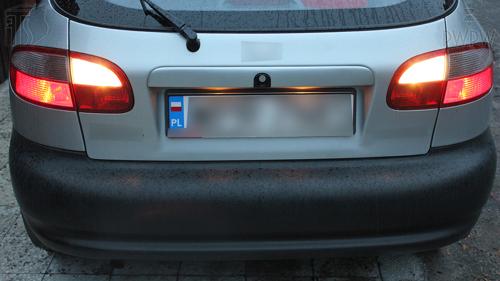
What may be the effect if you use damaged or worn wiper blades in a passenger car?
C: Deterioration of road visibility in the rain.
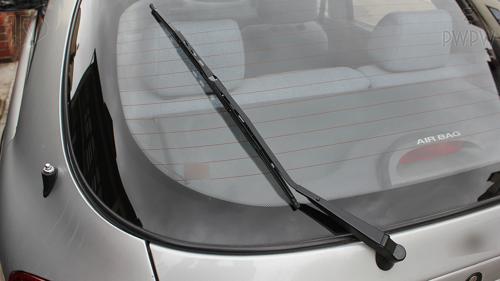
What auditory signals can you emit from a motor vehicle?
C: Continuous, non-piercing sound.
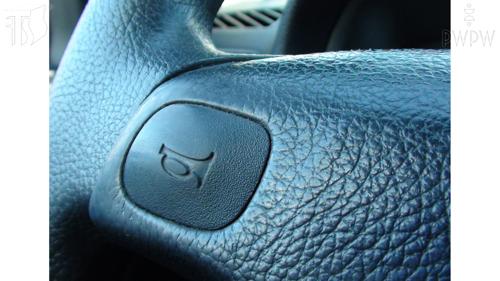
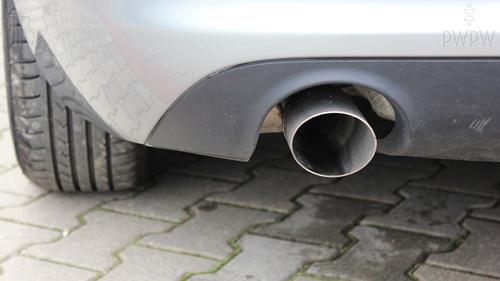
What may be the effect a leaking exhaust system in a motor vehicle?
B: Increased level of noise produced by the vehicle.
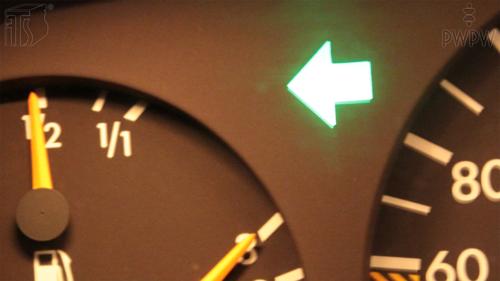
What may be a cause of a significantly increased flashing frequency of the turnsignals?
B: A failure of one of the turnsignal bulbs.
What may be the effect of wrong adjustment of low-beam lights?
B: Deterioration of road visibility at night.
This blue control light informs you that the following lights are switched on:
C: high-beam lights.
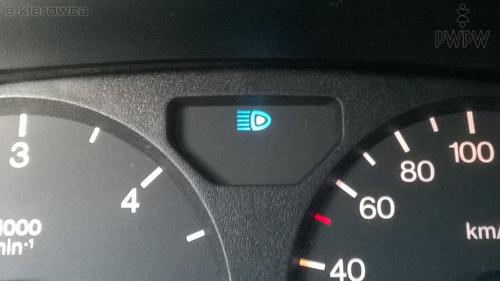
What must be checked when the control light of indicators began to blink much faster?
C: The condition of direction indicator bulbs.
For which of the following states of the engine should the oil level in the engine be checked?
C: Before the cold engine is started or at least a few minutes after switching it off.
In which of these dangerous circumstances on the road does a vehicle equipped with the so-called ASR i.e. anti-skid system for a running vehicle come in handy?
C: In the case of sudden acceleration on a wet surface.
In which of these dangerous situations does a vehicle equipped with the so-called ASR, i.e. Acceleration slip regulation system designed to prevent loss of traction of driven road wheels perform well?
C: In the case of sudden starts on slippery surfaces.
In which of these dangerous situations on the road does a car equipped with the so-called ESP, i.e. the electronic stability program perform well?
A: In the case of overcoming a sharp turn and difficulties in maintaining the desired trajectory.
In which of these dangerous situations on the road does a car equipped with the so-called ESP, i.e. the electronic stability program perform well?
C: In the case of a necessity to overcome several consecutive turns.
What should you do upon determining improper engine oil pressure?
B: Check the oil level and eventaully replenish.
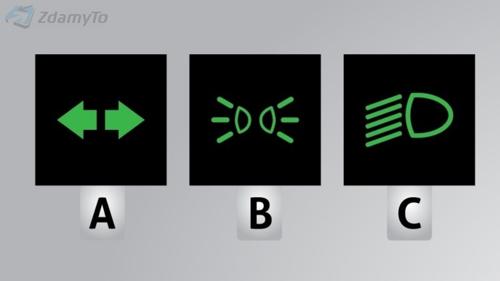
Which of the control lights in the illustration informs you that the dipped headlights are turned on?
C: C.
Which the control lights visible in the illustration informs you that the direction indicators are enabled?
A: A.
Which of the control lights visible in the illustration informs you that the running lights are enabled?
C: C.
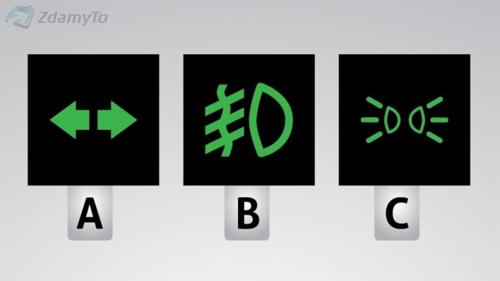
Which of the control lights visible in the illustration applies to the front fog lights?
B: B.
which of the control lights visible in the illustration informs you that direction indicators are enabled?
A: A.
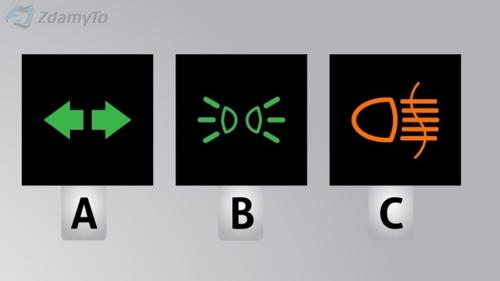
Which of the control lights visible in the illustration informs you that the rear fog lights are enabled?
A: A.
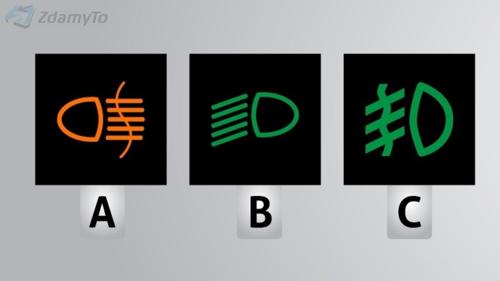
Which of the control lights visible in the illustration informs you that the main beam lights are enabled?
B: B.
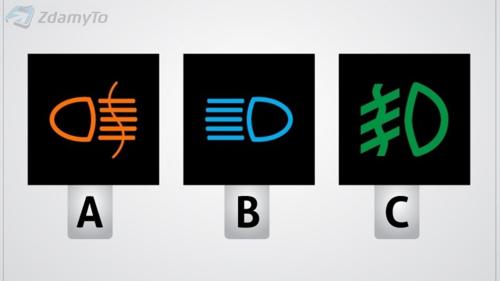
Which of the control lights visible in the illustration indicates that the safety seat belts are not fastened?
B: B.
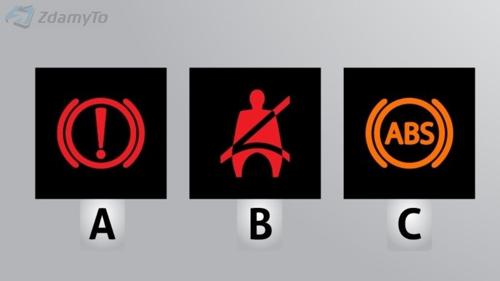
Which of the control lights visible in the illustration upon lighting up, requires you to stop immediately and rectify the fault?
B: B.
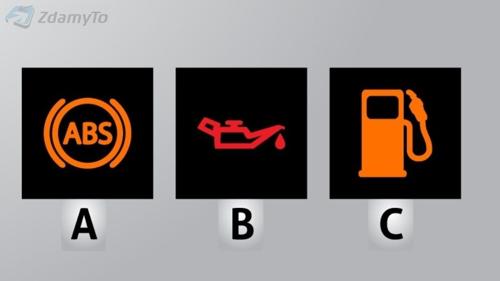
Which of the control lights visible in the illustration informs you that the rear windscreen heater is enabled?
B: B.
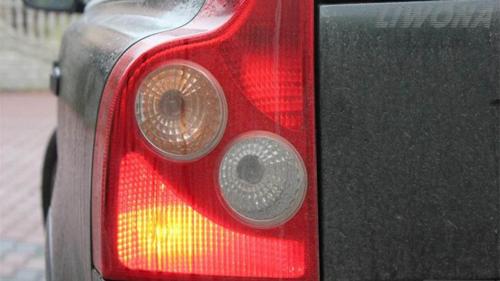
What failure is indicated by a rapidly flashing turn signal?
C: Burnt-out turn signal bulb.
What may be the sign of a broken brake cable in a passenger car?
B: Little or no resistance of the brake pedal u[pon pressing.

Which of these, causes the failure of the compression ignition engine from achieving starter rotation?
A: Faulty starter.
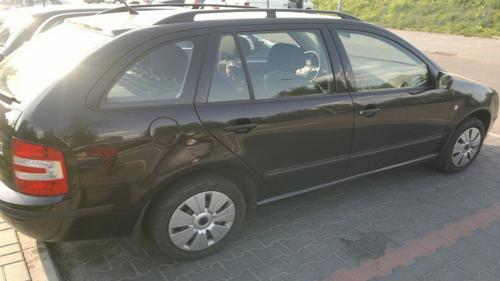
Which of these factors may be the reason for the car pulling to the left?
A: Incorrect toe-in of the front wheels.
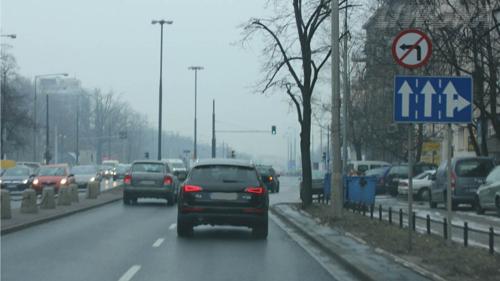
Which of these factors may cause rapid wear of the tires on the front wheels of a passenger car?
B: Incorrect toe-in.
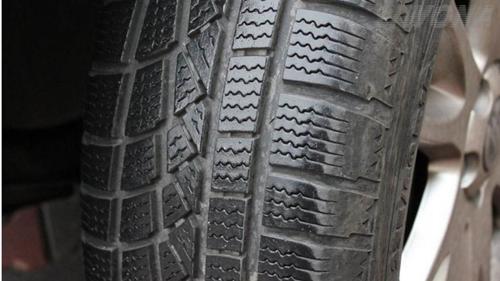
How do the dipped headlights illuminate the road in front of a passengers car?
C: Asymetrically.
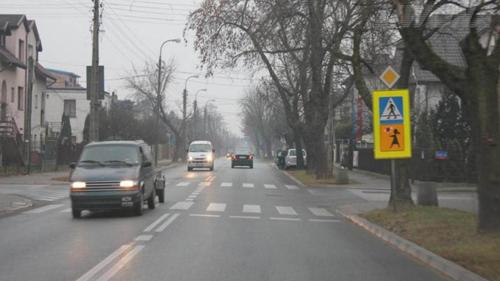
In which of these cases are you obliged to replace the tyre with a new one in a passenger car?
C: When disformations are visible on the sides of the tyre.
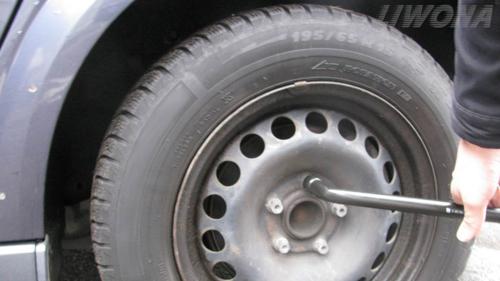
In which picture is the headrest properly mounted?
A: A

Is driving a tram without covers on the couplings between the carriages from the side of the passenger doors permitted?
C: It is permitted provided there are markings on the couplers indicating prohibition of entry between the carriages.
What is the function of the anti-lock braking system (ABS)?
B: It helps to maintain the ability to manoeuvre while braking.
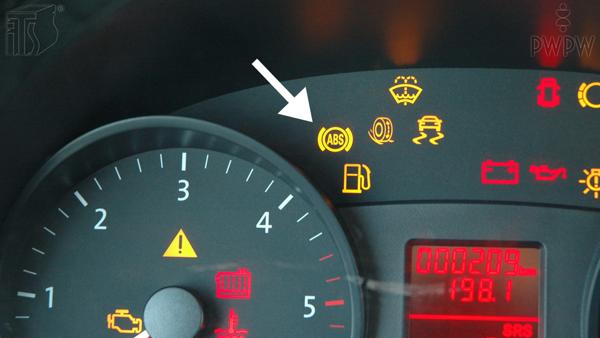
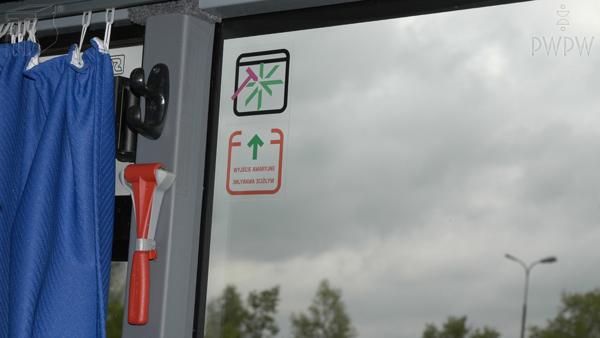
Before you start driving a bus equipped with emergency exits, must you make sure that access to such exits are not obstructed?
C: Yes.
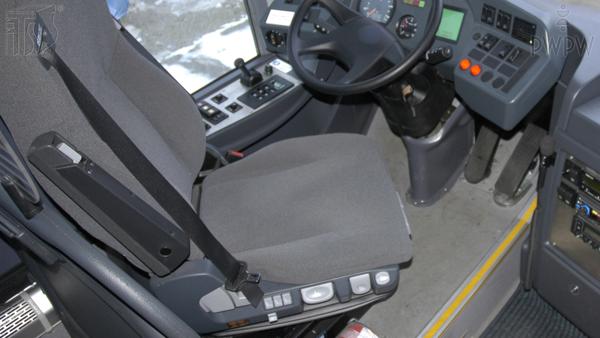
When will safety belts serve their function?
A: When they are properly adjusted and fastened.
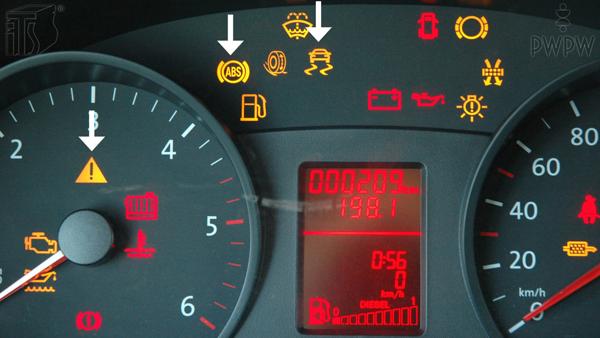
Which of the safety systems applied in buses is responsible for the most effective method of braking?
C: The anti-lock braking system (ABS).
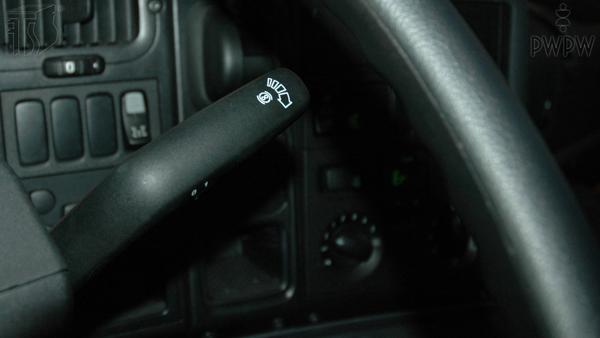
What is the function of a retarder applied in buses?
B: It offers the possibility of an alternative method of braking.
What causes ignition in a diesel oil?
C: High temperature of the air.
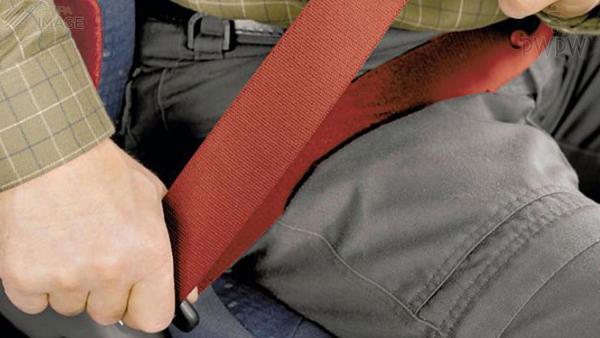
In which of the following cases are the safety belts properly fastened?
C: When they are close-fitting to the body below the neck.
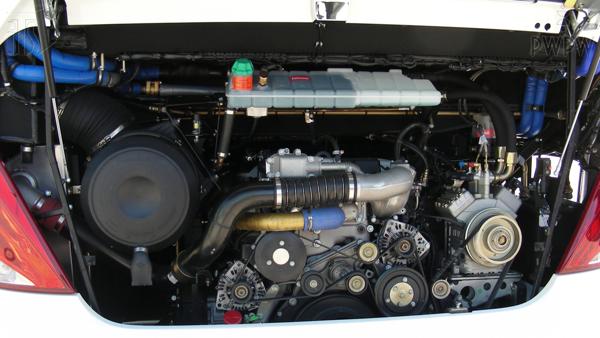
Which of the following functions does the retarder in a bus serve?
C: It ensures constant braking during a lengthy downhill drive.
What function in a diesel engine does a glow plug perform?
A: It makes the start of a cold engine easier.
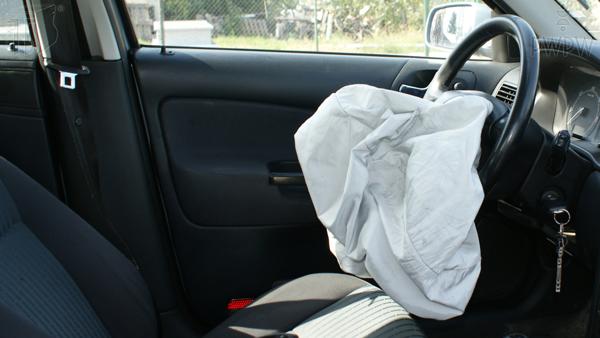
Will the airbag serve its function during an accident, if you fail to fasten the seatbelts?
B: No, if the airbag opens, this will expose you to head or spine injuries.
What is the function of the ABS in a lorry?
C: It enables driving during emergency braking.
Should the design of the moped limit its speed?
C: Yes, up to 45 km/h
What driver assistance devices help to maintain a proper distance from the preceding vehicle?
A: Adaptive cruise control (active).